ARChive
The brief
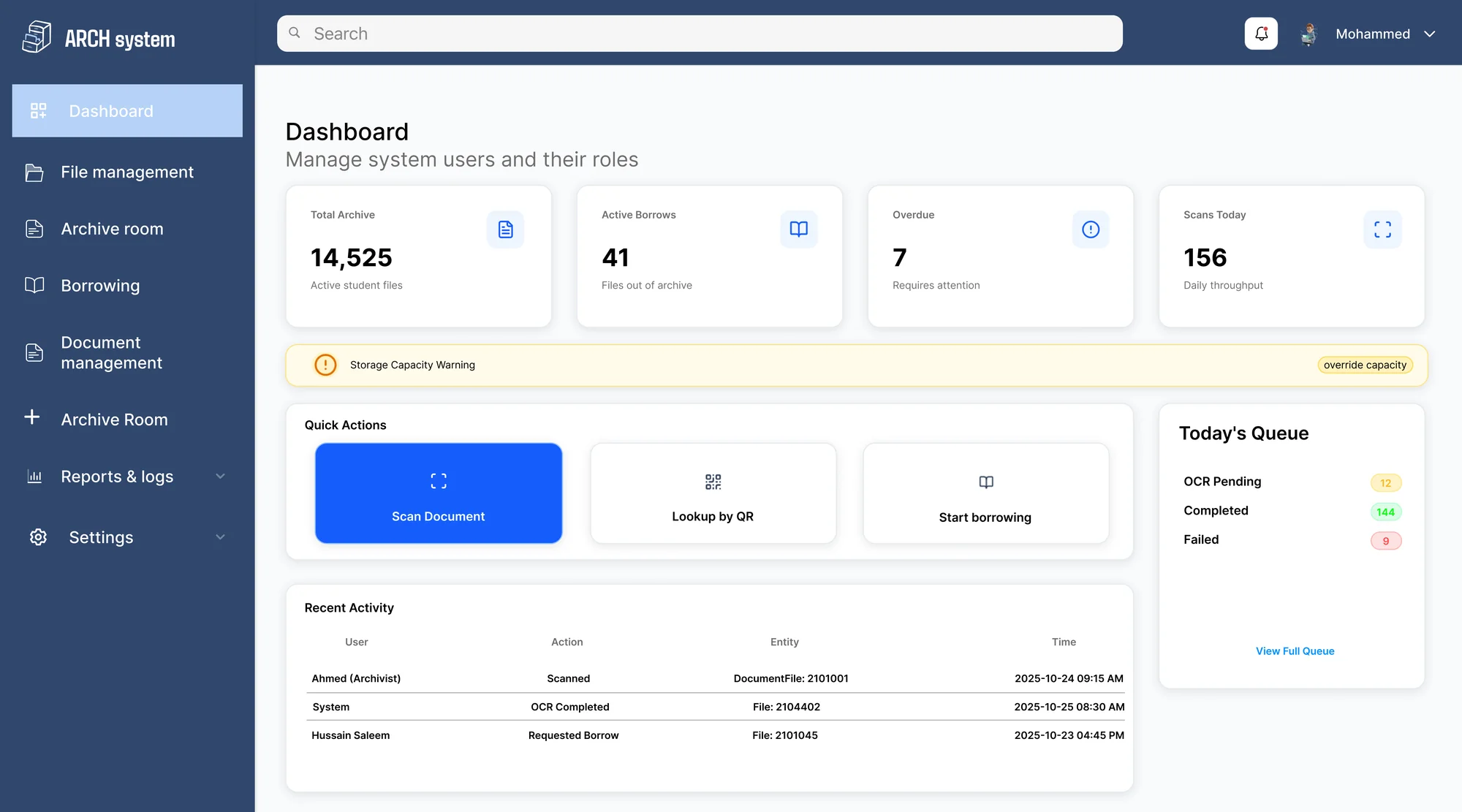
A physical archive that finally knows where everything is: 14,525 student files tracked to the exact cabinet and drawer, scanned with OCR, and checked out by QR code.
A university registry held 14,525 physical student files with no reliable way to know where a file sat, whether it was complete, or who had borrowed it and when it was due back.
What I built
A document-archive operating system: every physical file gets a digital record, a location down to cabinet and drawer, a completeness score and a status. Staff scan documents through an OCR pipeline, and faculty borrow files by scanning a QR code, with due dates, overdue reminders and a full return trail.
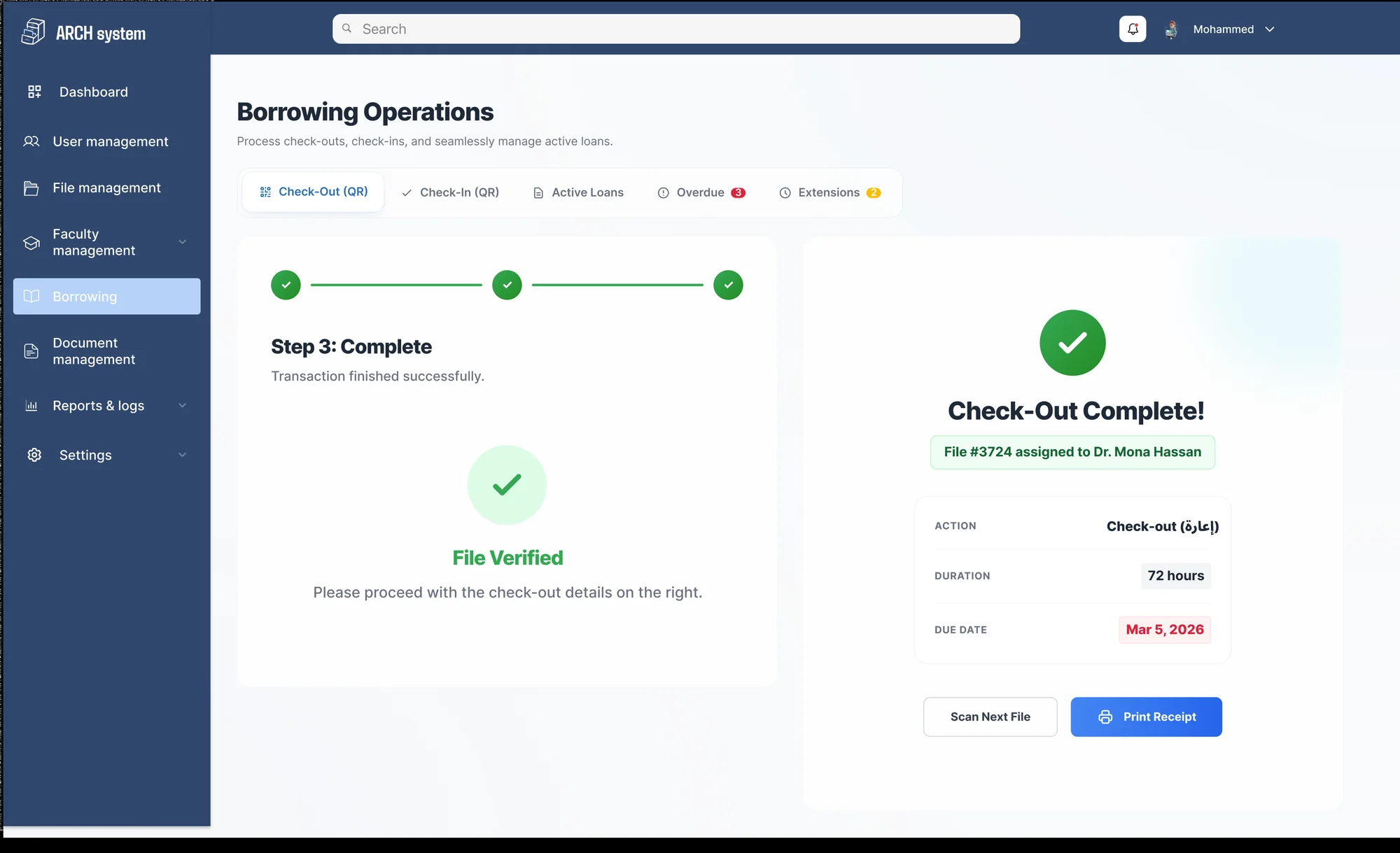
Borrowing by QR, accountable to the hour
Faculty check files out by scanning a QR code: assigned for a set duration, receipt printed, overdue reminders one click away.
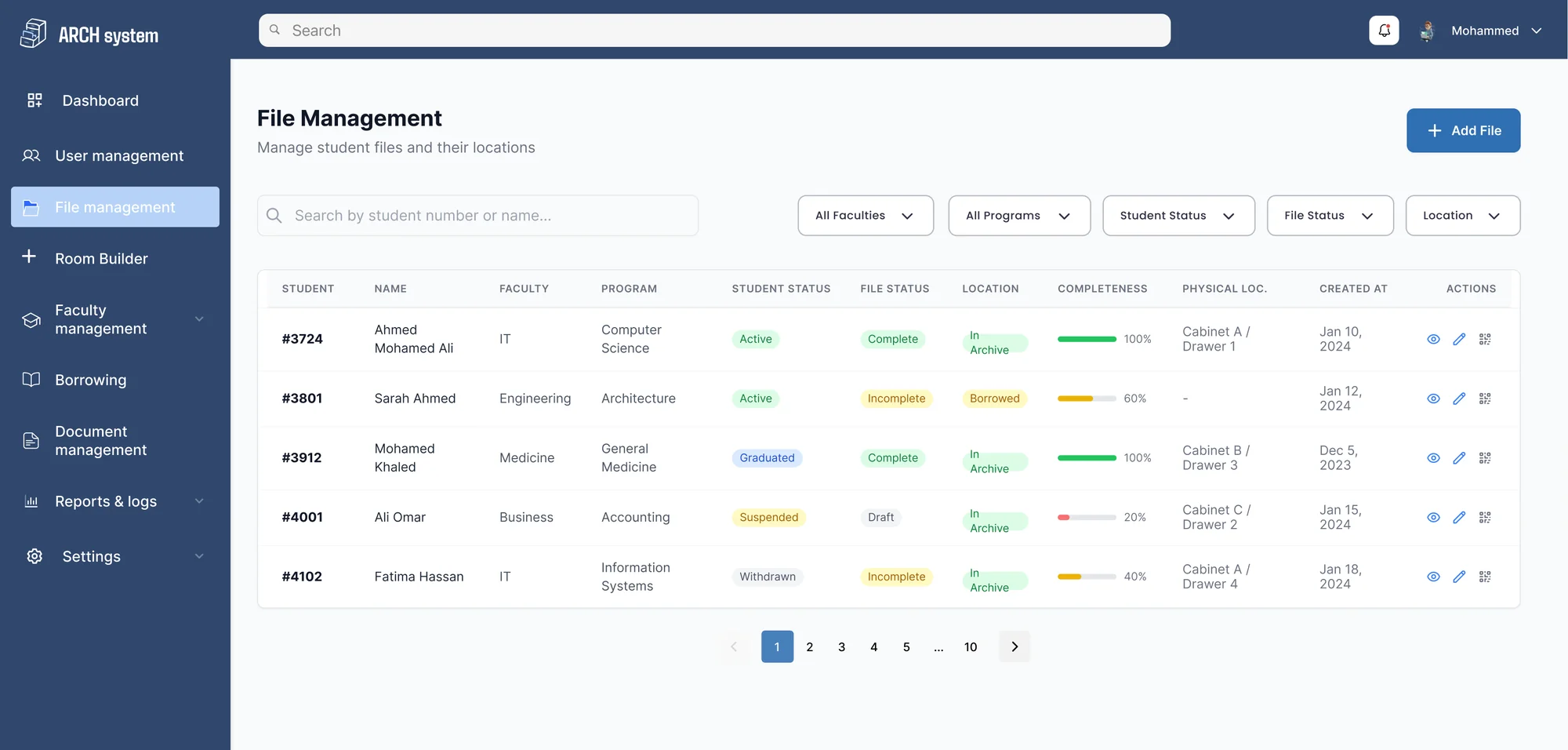
Every file has an address
All 14,525 student files carry a physical location down to cabinet and drawer, a completeness score and a status. Finding a file stops being an expedition.
Backups with restore points
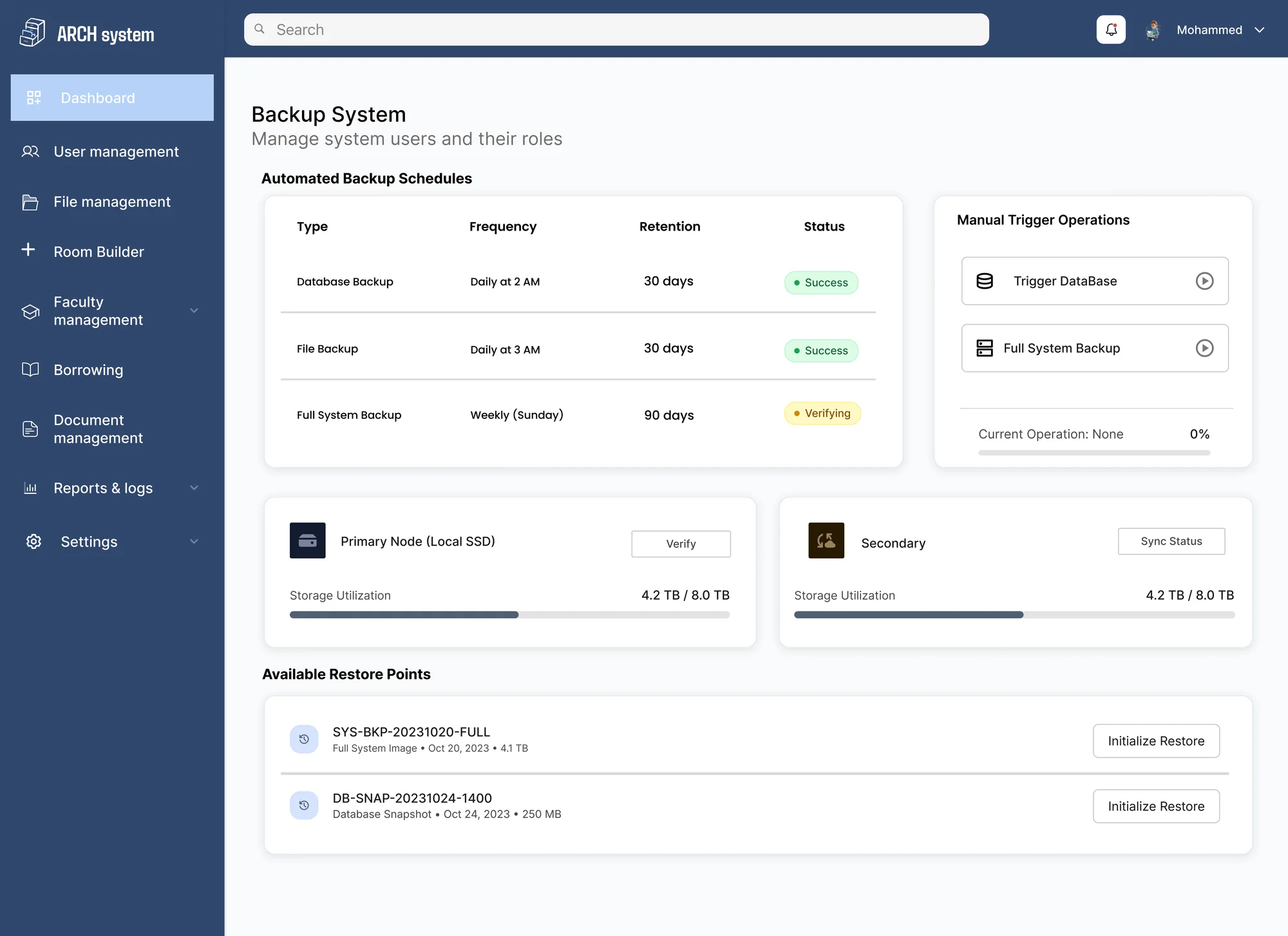
Automated schedules push snapshots to primary and secondary storage nodes. The archive that tracks everything is itself recoverable.
Roles, not passwords passed around
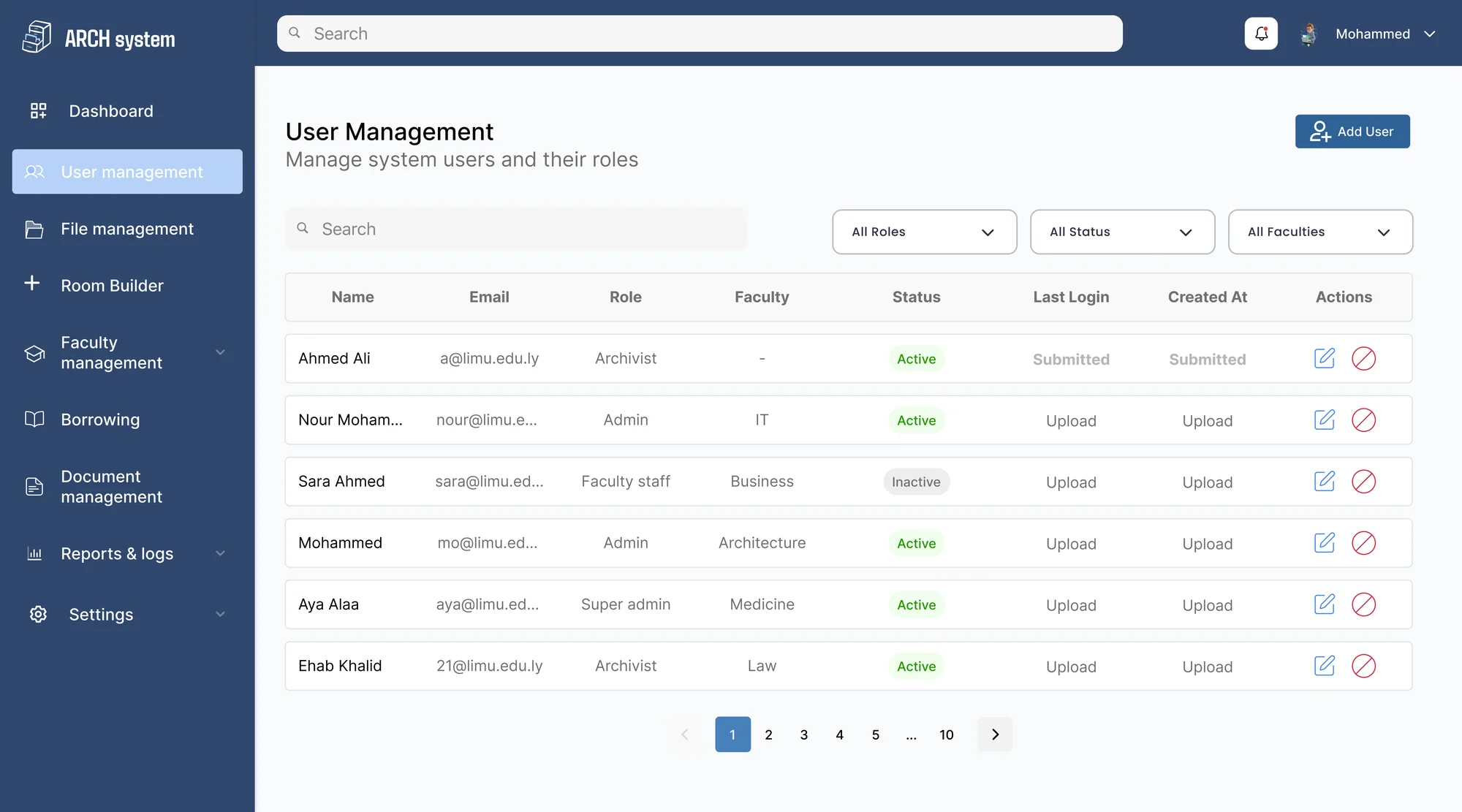
Archivists, faculty and admins each get exactly the access their role needs, enforced by the system, recorded in the trail.
The hard part
Bridging the physical and the digital: QR-based check-out and check-in of physical files with durations and due dates; an OCR scanning pipeline with a processing queue; overdue tracking and reminders; role-based access for archivists, faculty and admins; and an automated backup system with primary/secondary nodes and restore points.
The result
The archive knows where everything is: 14,525 files tracked, borrowing accountable to the hour, and the whole system backed up automatically with restore points.
14,525 files tracked to the exact cabinet and drawer.
Borrowing accountable to the hour.
The whole system backed up automatically with restore points.
Built end to end